
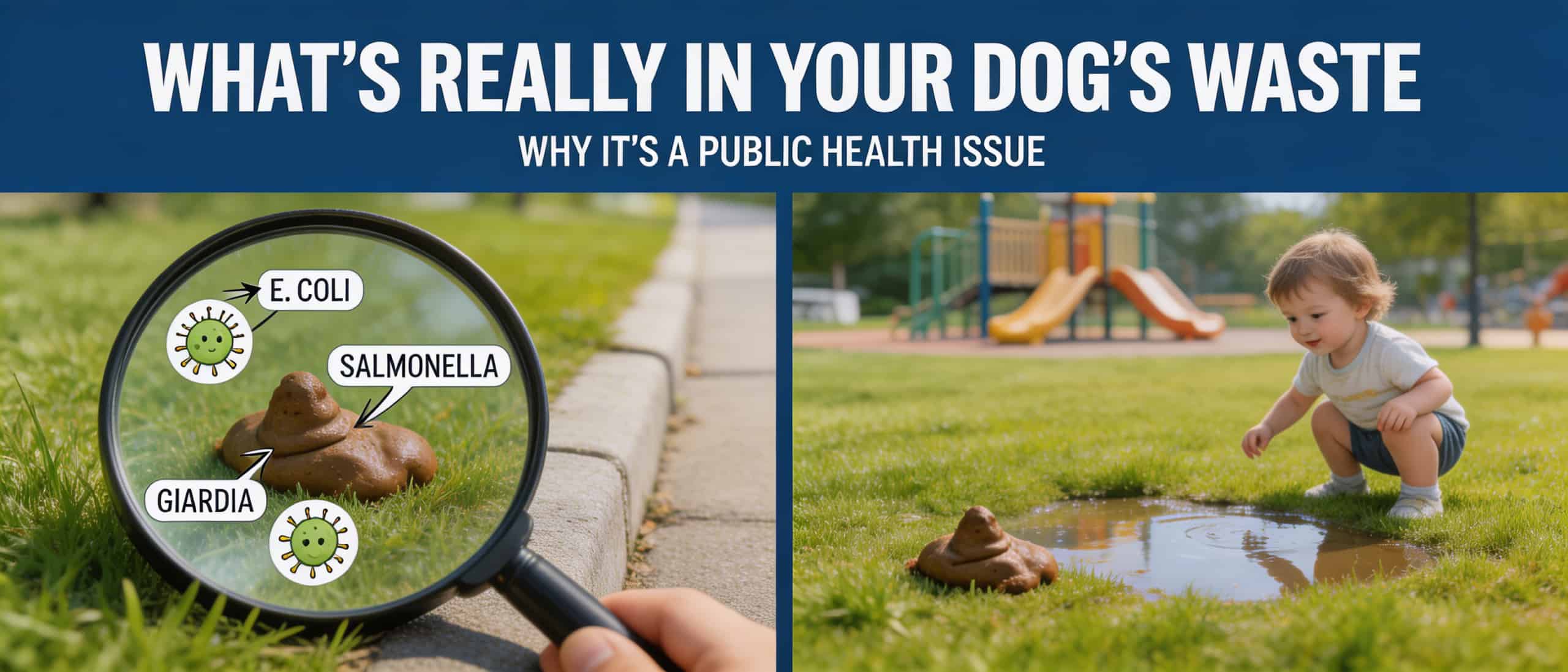
Most people treat dog poop as just an annoyance. Something gross to deal with, ideally as quickly and as rarely as possible. But if you knew what was actually inside it, you’d treat it a little differently.
Dog waste is not inert. It’s not just an organic mess that breaks down harmlessly into the soil. It’s a concentrated source of pathogens that can cause real illness in humans and animals — and in the Inland Empire, where our communities are dense and our weather creates specific conditions for bacterial growth, this is more than just a theoretical concern.
What’s Actually in Dog Waste?
Bacteria A single gram of dog feces can contain 23 million fecal coliform bacteria, according to research published by the Environmental Protection Agency. These include E. coli strains that cause intestinal illness, Salmonella, Campylobacter, and Yersinia — all of which can be transmitted to humans.
Children who play in contaminated soil are at particular risk. Young children touch soil and grass constantly, and their immune systems are still developing. A backyard that hasn’t been cleaned regularly can have contaminated ground even in areas that look clean.
Viruses Dog parvovirus is one of the most serious and resilient viruses in dog feces. It can survive in the environment for months to years under the right conditions. Parvovirus doesn’t affect humans, but unvaccinated dogs who come into contact with contaminated soil can contract it — and it’s often fatal in puppies.
Parasites This is where things get genuinely alarming for human health.
Toxocara canis (roundworm) eggs can remain viable in soil for years. In humans, especially children, they can cause a condition called visceral larva migrans, where roundworm larvae migrate through body tissues. In severe cases, this can cause vision loss.
Ancylostoma (hookworms) can penetrate human skin directly. Walking barefoot in contaminated soil can lead to cutaneous larva migrans, where the hookworm moves under the skin, causing intense itching and welts.
Giardia is a parasitic cyst that causes gastrointestinal illness in both dogs and humans. It spreads easily in water and soil and is highly resistant to standard disinfection.
Cryptosporidium is similar — a parasite that causes severe diarrhea and can persist in water sources long after contamination.
The Inland Empire Specific Problem
Southern California’s climate creates specific risk factors. During our hot, dry summers, bacteria and parasites in dog waste can concentrate as waste desiccates. When Santa Ana winds kick up, that contaminated dust can become airborne. When winter and spring rains come, the first flush of stormwater washes accumulated waste directly into storm drains.
Those storm drains don’t lead to treatment plants — they lead to local waterways and eventually to the Pacific Ocean. Southern California’s stormwater program identifies pet waste as one of the primary sources of bacterial contamination in local creeks and rivers. This isn’t just an environmental issue. People who fish, swim, or kayak in affected waters are at real risk.
What You Can Do
Pick up immediately. The longer waste sits, the more the pathogens leach into soil and the more likely wind, water, and foot traffic are to spread contamination.
Wash hands. Always, after handling waste or anything that may have contacted contaminated soil.
Keep kids away from areas where dogs regularly go. This is especially true in shared community spaces that may not be cleaned regularly.
Keep up with your dog’s parasite prevention. Monthly heartworm prevention typically covers roundworm and hookworm as well. Talk to your vet about the right protocol. The American Veterinary Medical Association has solid guidance on parasite prevention.
Clean your yard regularly. A professional service like DooGoodScoopers removes waste on a fixed schedule, which dramatically reduces the accumulation of pathogens in your yard. This matters especially if you have young children playing outside or if your dogs regularly come back inside.
Dog ownership is one of life’s genuine joys. Managing the waste that comes with it responsibly is part of the deal — both for your family’s health and your community’s.