
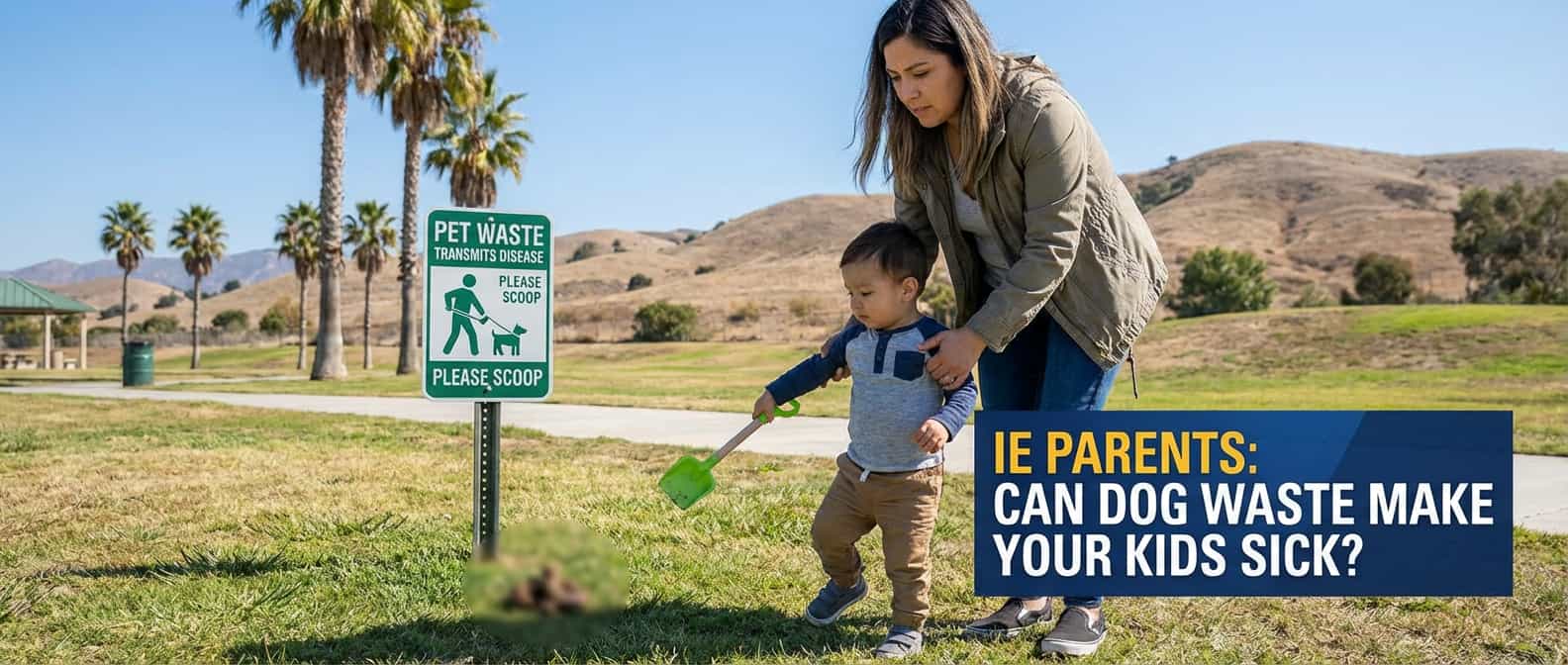
Nobody wants to think about this, but it’s worth knowing: children are the most vulnerable members of your household when it comes to dog waste-related illness. Not because dogs are dangerous — they’re not — but because the way kids interact with the world puts them in direct contact with the exact surfaces where dog waste pathogens accumulate.
If you’ve got dogs and kids, this one’s for you.
Why Kids Are More at Risk
Think about how young children spend time in a backyard. They sit on the grass. They touch the ground, then touch their faces. They dig. They play barefoot. They put things in their mouths. Even relatively careful kids are going to have soil-to-face contact dozens of times in an afternoon outside.
Now think about what’s in that soil if your backyard hasn’t been cleaned consistently. Not the visible piles — those are obvious. But the residue. The parasite eggs that are invisible to the naked eye and can survive in soil for months or even years. The bacterial contamination that persists after the actual waste is gone.
Children’s immune systems are also still developing, which means they’re less equipped to fight off pathogens that a healthy adult might handle without significant illness.
The Specific Risks
Toxocariasis (Roundworm) This is the one that pediatricians and veterinarians worry about most. When a child ingests soil containing roundworm eggs — even microscopic amounts on their hands — the larvae can migrate through the body to organs including the eyes, liver, and lungs. The eye form, ocular larva migrans, can cause permanent vision damage or blindness. The CDC has documented cases in the United States, and estimates that tens of millions of Americans have been infected at some point.
Hookworm Hookworm larvae can actually penetrate skin — so a child walking barefoot on contaminated ground is at risk even without putting anything in their mouth. The larvae migrate under the skin and cause intense itching and visible tracks. While this form doesn’t typically cause severe systemic illness, it’s unpleasant and requires treatment.
Campylobacter and Salmonella Both of these bacteria are common in dog feces. Symptoms in children include fever, diarrhea (often bloody), and stomach cramping. Young children, especially under five, can become severely dehydrated from these infections and may require hospitalization.
Giardia Giardia is tricky because it’s transmitted through water, and contaminated runoff from a yard can affect nearby play areas, sand boxes, or even water toys left outside. Symptoms include persistent diarrhea, gas, and stomach pain — often for weeks.
What Parents Can Do
Clean the yard consistently. This is the most impactful step. A yard that’s cleaned weekly has dramatically less pathogen accumulation than one that’s cleaned monthly. DooGoodScoopers offers weekly residential service throughout Rancho Cucamonga, Fontana, and the surrounding Inland Empire specifically because consistent frequency matters.
Enforce hand washing. After any outdoor play, hands get washed before they go anywhere near a face or food. Make it non-negotiable.
Keep sandbox areas separate from dog areas. If you have a sandbox, it should either be covered when not in use or fenced off from your dog’s primary bathroom area.
Stay current on your dog’s parasite prevention. Your vet can recommend an appropriate monthly preventive that covers roundworm, hookworm, and heartworm. This reduces shedding dramatically.
Talk to your pediatrician. If your child is experiencing unexplained gastrointestinal symptoms, fever, or eye issues, mention that you have dogs. Pediatricians don’t always think to ask.
The goal isn’t to scare anyone or make dogs seem like a health hazard — they’re one of the best things in a kid’s life, full stop. The goal is to make sure the backyard where your kids play is as safe as the rest of your home. Get a free quote from DooGoodScoopers and make regular cleanup one less thing to worry about.