
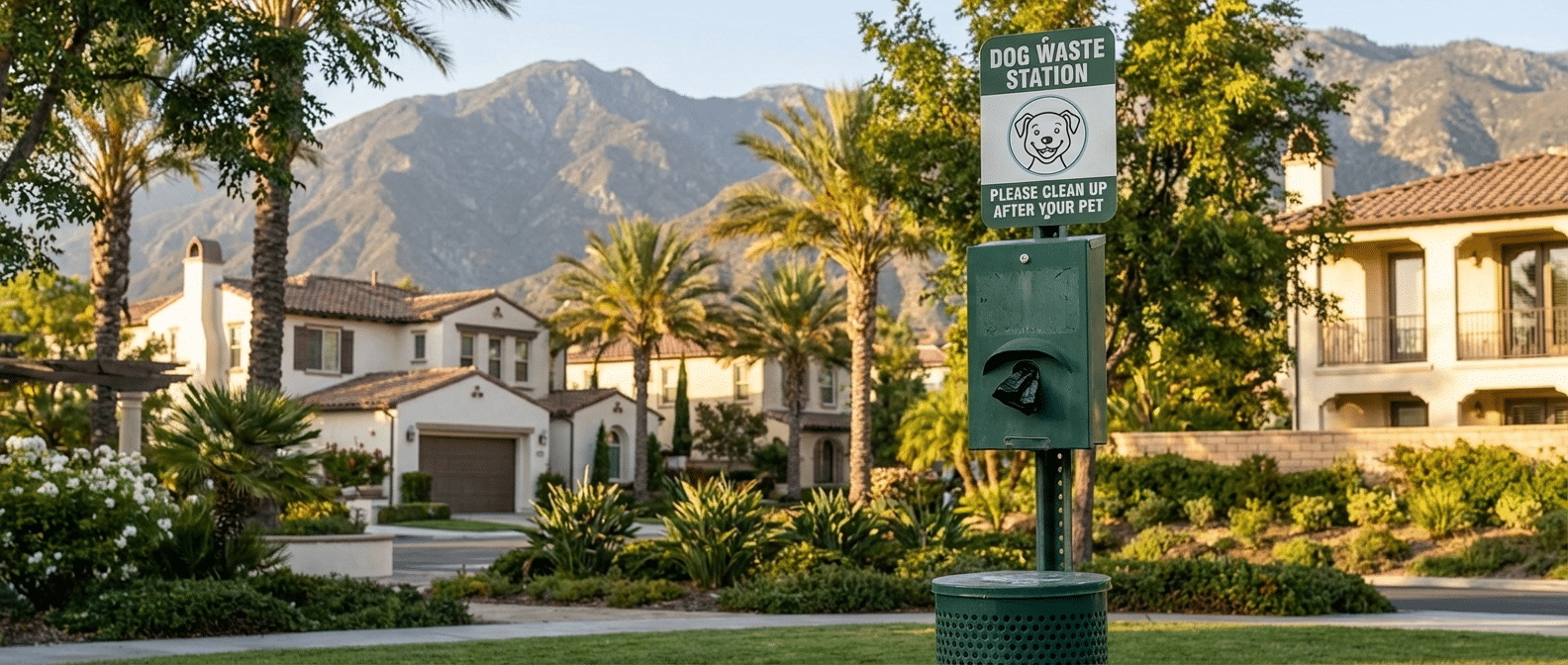
Let’s Talk About Pet Waste Stations!
Communities throughout the Inland Empire — from Rancho Cucamonga to Fontana and beyond — are known for their family-friendly amenities: walking trails, open green spaces, and dog-friendly parks. With roughly one in three homeowners owning a dog, that’s a lot of four-legged residents sharing your community’s common areas.
Here’s some perspective on the volume: a small dog under 25 pounds produces 2 to 4 pounds of waste per week. Larger dogs can produce 4 to 10 pounds. And studies suggest only 50 to 70% of owners consistently pick up after their pets — meaning a significant portion of that waste ends up sitting in your community’s grass, walkways, and parks.
Dog waste isn’t just unsightly. It carries bacteria, parasites, and pathogens that pose real health risks to people and other pets. Left unmanaged, it becomes a serious problem fast — especially in warm, high-traffic communities like those throughout the IE.
The good news? Strategically placed pet waste stations make it dramatically easier for residents to do the right thing — and dramatically harder to have an excuse not to.
Where Should Pet Waste Stations Be Installed?
Dog Parks Every dog park in your community should have at least one pet waste station. These areas see concentrated foot traffic from multiple dogs, and many canine diseases spread through fecal contact. Keeping these spaces clean is critical to keeping your community’s dogs healthy.
Large Green Areas and Open Fields In many communities, large grassy areas become informal off-leash spots whether designed for it or not. Residents let their dogs run, but without a waste station nearby, the cleanup rate drops significantly. Placing stations near these areas removes the “I had no bag” excuse.
Walking Trails and Paths If there’s no place to throw something away, it ends up on the ground. The same logic that applies to trash cans on trails applies to pet waste stations. Any maintained walking path in your community should have stations at regular intervals.
High-Traffic Common Areas Clubhouses, playgrounds, and mailbox clusters are all candidates for nearby pet waste station installations. Just use good judgment with placement — don’t install them so close to mailboxes or entrances that they become overflow trash cans for general garbage. Keep them in the general area, but give them their own space.
What Types of Pet Waste Stations Are Available?
Three main materials are used to manufacture pet waste stations: plastic/fiberglass, steel, and aluminum. In Southern California’s climate, material choice matters more than most people realize.
Plastic / Fiberglass Stations These are the most budget-friendly upfront, but they come with real downsides in the Inland Empire’s climate. The intense SoCal sun causes plastic to dry out and crack — sometimes within months of installation. Fiberglass lasts slightly longer, but when it does fail, it becomes brittle and can leave sharp shards behind — a potential liability for your HOA or property management company. Color fading is also a fast-moving issue that makes these units look neglected long before they’re functionally finished.
Steel / Metal Stations Steel stations feel sturdy and hold paint well initially, but they struggle in our environment for a few key reasons. Irrigation systems run constantly across IE communities, and the mineral-rich water from sprinklers accelerates rust and paint breakdown significantly. Add in our intense UV exposure and the occasional rain event, and steel stations tend to degrade faster than their build quality would suggest.
Aluminum Stations Aluminum is the standout choice for communities in our region. It doesn’t rust or sun-rot, and most aluminum stations use powder-coated paint that holds up well in the heat. The post is typically stainless steel — another corrosion-resistant metal. The paint will eventually fade (nothing is fully immune to sustained desert sun), but structurally, aluminum stations will outlast their plastic and steel counterparts by a wide margin in Southern California conditions.
One important note on landscapers: No matter which station you choose, none of them hold up to getting repeatedly struck by careless lawn equipment. Steel handles impacts the best; aluminum dents more easily; plastic and fiberglass don’t stand a chance against a lawnmower blade. Make sure your landscaping crews are briefed on station locations.
And a word of caution: skip the cheapest options on Amazon. They’re cheap for a reason — thin materials, poor construction, and locks that fail quickly. Invest in a quality unit from a reputable supplier and it will pay for itself in reduced replacement costs.
What Types of Waste Bags Are Used?
Pet waste station dispensers come in two bag formats:
Roll Bags — These function like a roll of paper towels, where residents tear off individual bags as needed. They tend to last longer per fill because each pull yields a single bag.
Header Bags — These tear off like pages from a notepad. They move faster because the perforations make it easy for multiple bags to pull off in one motion — which means they need to be restocked more frequently.
Both formats are typically similar in size (around 8″ x 12″). Thickness varies by product and price point, but most are made from high-density plastic that won’t tear when in use. Thicker bags cost more but provide peace of mind — especially in warmer months when you need them to hold up.
How Should Pet Waste Stations Be Installed?
This is where most installations cut corners — and where the real liability risk lives. Pounding a post into the ground without any preparation isn’t just sloppy; it can be dangerous.
Here’s what proper installation looks like:
- Survey the area first. Before any digging happens, have the installation area properly assessed. Mark all locations with white spray paint and contact 811 (California’s free utility marking service) to have underground utilities identified and cleared.
- Call 811 — no exceptions. Striking a gas, water, or electrical line is a nightmare scenario for any HOA or property manager. 811 marking is free and required by law before any ground penetration.
- Follow manufacturer specs. Pet waste stations should be assembled correctly and set at least 14 inches deep, secured with concrete. Skipping the concrete or going shallow means a wobbling, leaning, or knocked-over station within months.
- Account for our local conditions. In the Inland Empire, we deal with high winds, especially from Santa Ana conditions in the fall. Stations set deeper with extra concrete are far less likely to become a projectile during high-wind events. What seems like overkill is actually good planning.
Most vendors rush through installation because doing it right takes more time and costs more. When vetting an installation company, ask specifically whether they call 811 and whether they use concrete. If they can’t answer those questions clearly, keep looking.
At DooGoodScoopers, we work with HOAs, apartment communities, and commercial properties throughout the Inland Empire to keep shared spaces clean and compliant. Whether you’re looking to get a pet waste program started or need reliable recurring service to support existing stations, we’re here to help.
📍 Serving Rancho Cucamonga, Fontana, and surrounding Inland Empire communities. Get a free quote at DooGoodScoopers.com