If you live in an HOA community in the Inland Empire — and a huge percentage of newer homes here do — you’ve probably gotten the newsletter. Or the notice. Or the strongly worded reminder at the annual meeting.
Pet waste is one of the most common HOA complaints across San Bernardino and Riverside Counties, and the communities around Rancho Cucamonga, Fontana, Ontario, and Chino Hills are no exception. Understanding the rules, your obligations as a dog owner, and what happens when things go wrong can save you a real headache.
What Most Inland Empire HOAs Require
While every HOA has its own CC&Rs (Covenants, Conditions, and Restrictions), there are some pretty standard requirements you’ll find across the board:
Immediate cleanup. The overwhelming majority of HOA rules require you to clean up after your dog immediately — on common areas, walkways, near the pool, on the grass. “I’ll come back for it” is not acceptable in most communities.
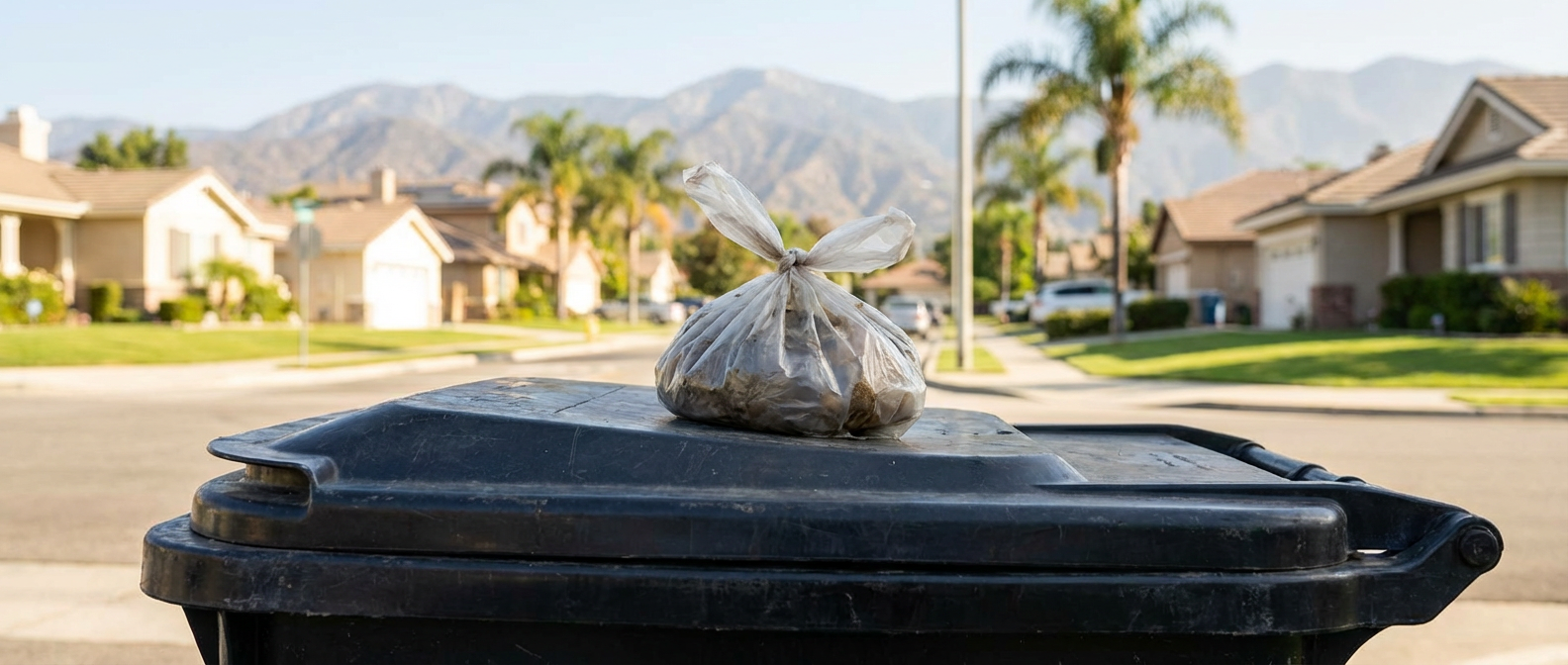
Bag disposal. You’re typically required to dispose of waste in designated receptacles, not in landscaping bins, drainage areas, or just left in a bag on the ground.
Leash requirements. Most communities require dogs to be leashed in common areas, which also makes cleanup your direct responsibility since you’re right there.
Your own property. Some HOAs also regulate waste management on your private lot, especially in attached or row-home communities where yards are close together and odor can become a neighbor issue.
What Happens When You Don’t Comply
HOAs take pet waste violations seriously because the complaints they receive about it are relentless. Here’s a typical enforcement progression:
- Written warning. First offense usually results in a letter or email.
- Fine. Repeat violations carry fines that can range from $50 to $500 depending on the HOA’s fine schedule.
- Hearing. Ongoing issues may require you to appear before the HOA board.
- Legal action. In extreme cases — chronic violations, damage to common areas — some HOAs pursue legal remedies.
Under California’s Davis-Stirling Act, HOAs have significant legal authority to enforce their rules and collect fines. It’s not worth testing them.
The Gray Areas
A few things dog owners frequently ask about:
“What about my backyard?” If your home has a private, enclosed backyard, most HOAs don’t regulate what happens back there — but odor can be grounds for a complaint if neighbors or inspectors are affected. If waste is accumulating to the point where it’s noticeable beyond your fence line, that’s typically fair game for an HOA action.
“Can they make me do a DNA test?” Yes. Some communities in Southern California have actually implemented dog DNA programs where dogs are registered and waste left in common areas can be matched back to the owner. It sounds extreme, but it’s becoming more common. If your community doesn’t have it yet, don’t assume it won’t.
“What if I have a service animal?” Service animals are subject to different rules under the ADA and Fair Housing Act, but cleanup responsibilities still apply to the owner.
How to Stay Ahead of HOA Issues
The simplest approach: be a good neighbor. Always clean up in common areas immediately. Never assume someone else will do it.
For your own yard, professional pet waste removal takes the worry out of accumulation. When DooGoodScoopers visits on a regular schedule, your yard stays compliant and odor-free — which matters not just for HOA rules but for your own comfort and your family’s health. Check out our residential service page for details on how we can help.
If your community is struggling with pet waste issues across the board, we also offer commercial services for HOAs, apartment complexes, and multi-unit properties. A clean community is a happier community — and one with fewer complaint letters.
For specific questions about your HOA’s rules, always check your CC&Rs directly or reach out to your management company. The California Association of Community Managers is also a good resource for understanding your rights and responsibilities as a homeowner in an HOA.