
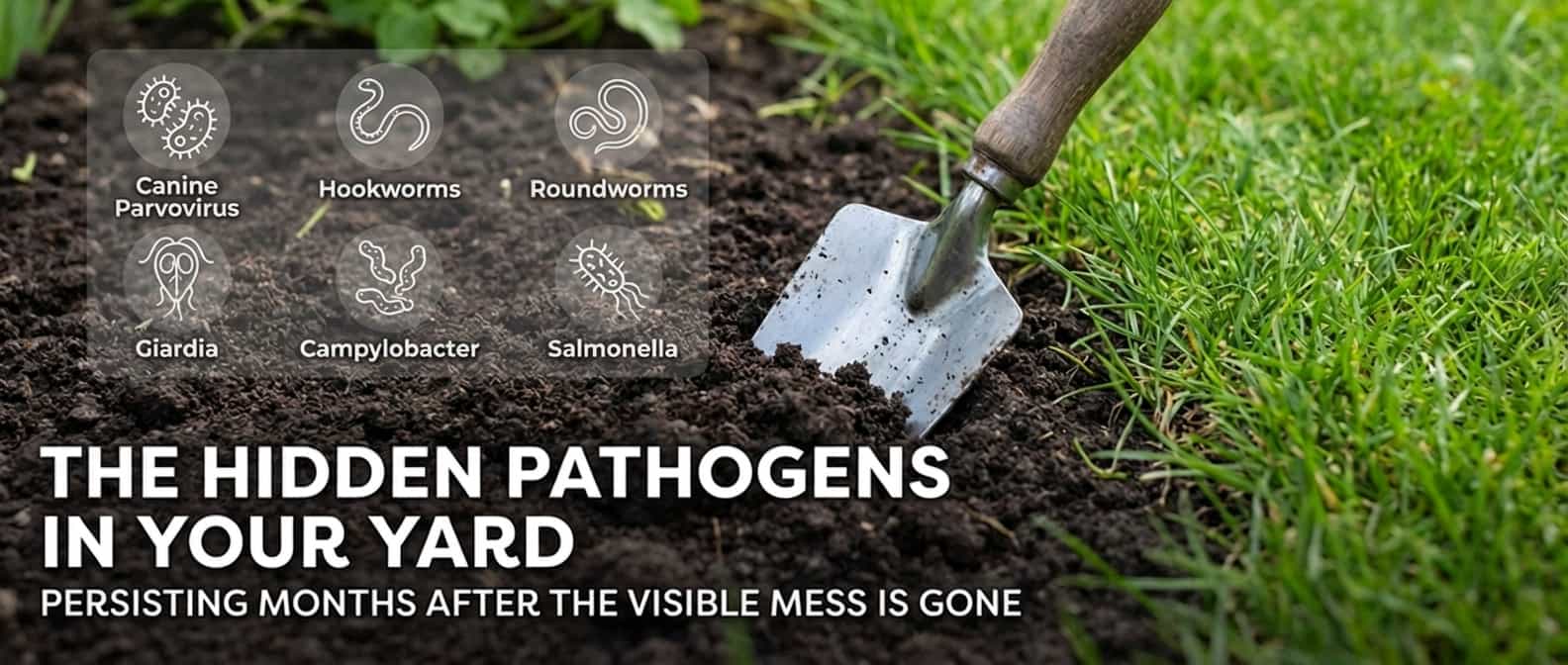
If you’ve ever stepped in it, you know the immediate problem with dog waste. But the longer-term problem — the one that sticks around in your soil, grass, and groundwater long after the visible mess is gone — is something most dog owners have never thought about.
Your backyard can harbor pathogens from dog waste that persist for months. In some cases, years. Here’s what they are, how they survive, and what you can do about it.
Canine Parvovirus
Parvo is one of the most feared diseases in dogs, and for good reason. It’s highly contagious, hits puppies especially hard, and has a mortality rate that can reach 90% without treatment. The terrifying part from an environmental standpoint: the parvo virus is extraordinarily hardy. It can survive in soil and on surfaces for months to years under the right conditions. Freezing doesn’t kill it. Regular cleaning products don’t kill it. Even bleach requires specific concentrations to be effective.
If an infected dog uses your yard, the ground can remain contaminated long after the dog has recovered or moved on. Unvaccinated puppies who sniff or lick contaminated soil are at serious risk.
What to do: Keep vaccinations current. The AVMA recommends parvo vaccination as a core vaccine for all dogs. Remove waste quickly to reduce environmental viral load.
Hookworms
Adult hookworms live in the intestines of dogs and shed eggs through feces. Those eggs develop into larvae in warm, moist soil — exactly the conditions you find in a backyard that’s watered regularly. The larvae can survive for weeks and are capable of penetrating skin directly.
For dogs, hookworm infection causes anemia, bloody diarrhea, and in puppies, can be fatal. For humans, larvae that penetrate the skin cause cutaneous larva migrans — a visible, intensely itchy track as the worm moves under the skin. Most cases resolve without treatment, but it’s deeply unpleasant.
The Inland Empire’s warm climate means hookworm larvae have a favorable environment for much of the year.
Roundworms (Toxocara canis)
Roundworm eggs are remarkable survivors. Studies have found viable eggs in soil samples taken from yards that hadn’t housed dogs for over a year. The eggs are microscopic and impossible to see with the naked eye.
In dogs, roundworms cause pot-bellied appearance in puppies, diarrhea, vomiting, and poor coat condition. In humans — particularly children — ingested eggs can cause visceral larva migrans, where larvae migrate through organs including the liver, lungs, and eyes.
The scary statistic: The CDC estimates that Toxocara infection may affect as many as 14% of the U.S. population. Most cases are mild and go undiagnosed, but the ocular form can cause permanent vision loss.
Giardia
Giardia exists as cysts in infected feces. These cysts are resistant to standard chlorination and can survive in water and moist soil for months. Dogs can carry and shed Giardia without showing obvious symptoms, meaning you may not know your yard is contaminated.
Human infection causes a gastrointestinal illness characterized by severe diarrhea, bloating, gas, and nausea — often lasting weeks if untreated. Treatment is generally effective, but the illness is miserable.
Giardia contamination can travel. Rainwater runoff from a contaminated yard can carry cysts into the street, drainage areas, and ultimately into local water systems.
Campylobacter and Salmonella
These bacterial pathogens are common in dog feces and are among the leading causes of foodborne illness in the United States. Both can cause fever, diarrhea, and cramping that lasts a week or more. In immunocompromised individuals, infants, and elderly people, these infections can become serious.
Reducing Pathogen Load in Your Yard
You can’t sterilize your backyard, and you don’t need to. But you can dramatically reduce the accumulation of pathogens through consistent waste removal.
The key word is consistent. Removing waste weekly — or better yet, more frequently — prevents the buildup of eggs, cysts, and bacteria that makes your yard a genuine health risk. Leaving waste to accumulate for weeks at a time allows much higher pathogen concentrations to develop.
Professional pet waste removal is the most reliable way to maintain that consistency. DooGoodScoopers serves the Inland Empire on a regular schedule, ensuring your yard stays clean without you having to remember or motivate yourself to do it. See our residential service options and get a quote online.
Your yard should be a place you enjoy. Understanding what’s lurking in it — and doing something about it — is how you keep it that way.