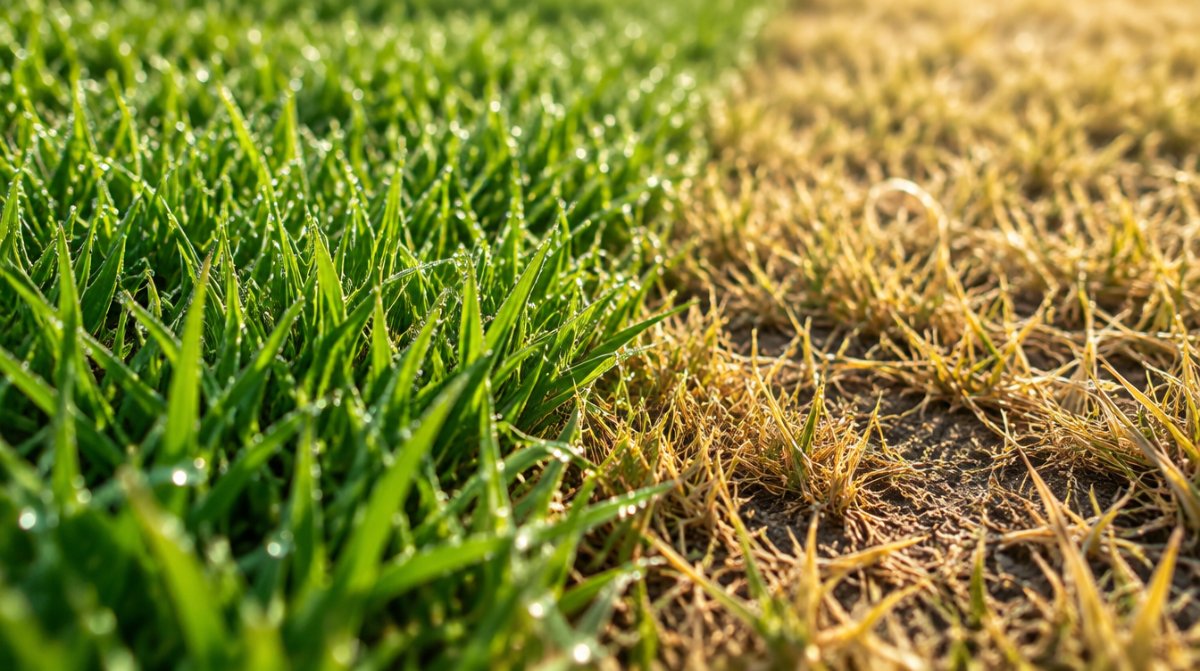
Yes. Dog poop left sitting on a lawn burns it: the grass turns yellow directly under the pile and dies back in a ring around it, and that damage is on top of the patchy yellow spots where your dog likes to pee. The good news is that in our experience, real grass recovers on its own once the waste is picked up regularly. No reseeding, no lawn doctor. Just stop letting it sit.
Here’s what we actually see in Inland Empire yards, what happens on turf and other surfaces (turf is a different problem entirely), the two habits that make it worse, and how long it takes a burned lawn to come back.
What dog poop does to grass when it sits
When we show up to a yard that hasn’t been scooped in a while, the damage is obvious from the gate. There’s a yellow patch directly under each pile, and the grass around it is dying too, so each one leaves a dead spot bigger than the pile itself. Multiply that by weeks of waste from a couple of dogs and the lawn looks like it has a rash.
Separately, there are the pee spots: patchy yellow sections where the dogs clearly prefer to go. Those aren’t the poop’s fault, but they show up in the same yards, for the same reason: nobody’s out there dealing with it day to day.
The bottom line we tell customers: dog waste is not good for grass when it’s left sitting too long. The problem isn’t that your dog went in the yard. It’s how long it stayed there.
Does the grass grow back?
On real grass, yes, and it’s one of the most satisfying parts of this job. Every time we take on a home with a live lawn, do a thorough initial cleanup, and then keep it on regular weekly service, the grass grows back beautifully. Within a few weeks the yellow fades, the dead rings fill in, and the yard turns back into a place the kids and the dogs can actually play.
We don’t tell people to reseed or overhaul their irrigation to fix poop burn. Pick up the waste consistently and give it time. If a yard still looks rough after a couple of months of regular service, the cause is almost always something other than the poop.
Turf is a completely different problem
If you have artificial turf, the issue isn’t burn. It’s smell, and it’s stickiness.
Waste doesn’t soak into turf; it sits on top and starts to bind to the fibers. If it comes out a little soft and then the sun bakes it in, it’s like a cake baked in a pan nobody greased. It is stuck, and it is not letting go for anything. And turf that’s had waste baking into it for a couple of weeks stinks to high heaven in a way grass never does, because there’s no soil to absorb anything.
We have tools specifically for getting that mess up off turf, and our sanitizer and deodorizer add-on does wonders for the smell. It’s not only for turf, either; the sanitizer works on any surface, including grass, rock, and concrete. But on turf it’s the difference between “scooped” and “you can sit out here again.”
Two habits that make the damage worse
1. Running the sprinklers every day with waste on the ground
This is the one we see the most. The sprinklers come on daily, the piles never get picked up, and every cycle turns them into a liquidy, spread-out mess that’s hard to scoop and soaks right into the lawn. It takes a contained problem and smears it across the grass. If the yard hasn’t been scooped, either hold the sprinklers until it has been or pick up before they run.
2. Leaving it as “fertilizer”
Some customers figure dog poop is doing the lawn a favor. It isn’t; the yellow spots under every pile are the proof. We’ve covered that one before, so we won’t repeat it here: why dog waste isn’t fertilizer.
What about the pee spots?
Hosing down urine spots right after the dog goes does help dilute them. Realistically, though, not everyone has time to follow their dog around the yard waiting for it to pee. Plenty of owners let the dogs out to play and only find out where the favorite spot is when the yellow patch makes it obvious. If you can rinse the spots, do. If you can’t, don’t beat yourself up; the poop is the part that’s easy to fix, and it’s the part that’s doing the ring-shaped damage.
How to get a burned lawn back
- Get everything up at once. A thorough reset cleanup, not just the fresh ones. (This is what our initial cleaning is for.)
- Then keep it picked up. Weekly is the schedule that keeps grass healthy; for 1 or 2 dogs bi-weekly can work, and here’s how we decide.
- Don’t water piles into the lawn. Scoop first, then sprinklers.
- Rinse pee spots when you catch them. Optional, but it helps.
- Give it a few weeks. On real grass the yellow fades and the dead rings fill in on their own.
If you’d rather not be the one doing step 1 and step 2, that’s literally what we’re for. The instant quote tool gives you a price in about 30 seconds, and our pooper scooper service covers the whole Inland Empire and High Desert; see the service area list if you’re not sure we come to you. For more on keeping a dog yard healthy through the year, see our seasonal yard care tips for dog owners.
Dog poop and grass FAQ
Why is the grass yellow under dog poop?
Waste left sitting burns the grass directly beneath it and the blades around it, leaving a yellow spot with a dying ring. The longer it sits, the bigger the dead area. Pick it up regularly and real grass recovers.
Will my lawn recover from dog poop damage without reseeding?
In our experience, yes. Once the yard gets a thorough cleanup and stays on regular service, the grass grows back on its own within a few weeks.
Is dog poop worse for artificial turf than for grass?
It’s a different problem. Turf doesn’t burn, but waste binds to the fibers and bakes in, and the smell gets bad fast because there’s no soil to absorb anything. It needs the right tools to remove and a sanitizer to deal with the odor.
Should I run the sprinklers if there’s poop in the yard?
Not until it’s picked up. Daily watering over waste turns it into a liquid mess that spreads across the lawn and is much harder to clean.